
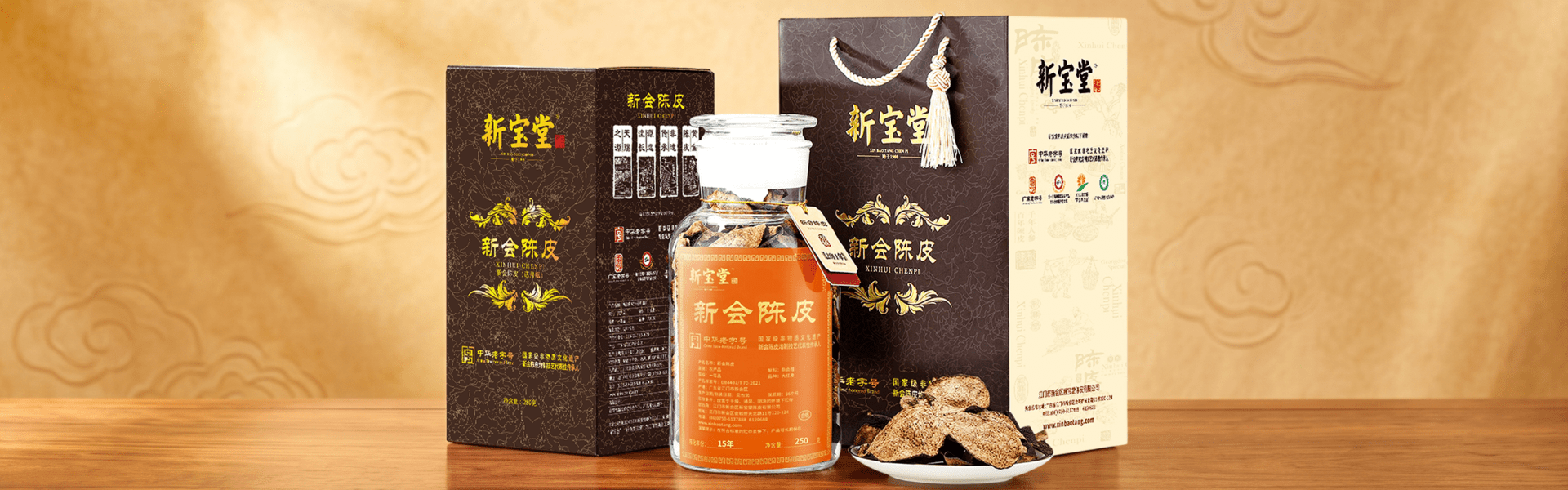

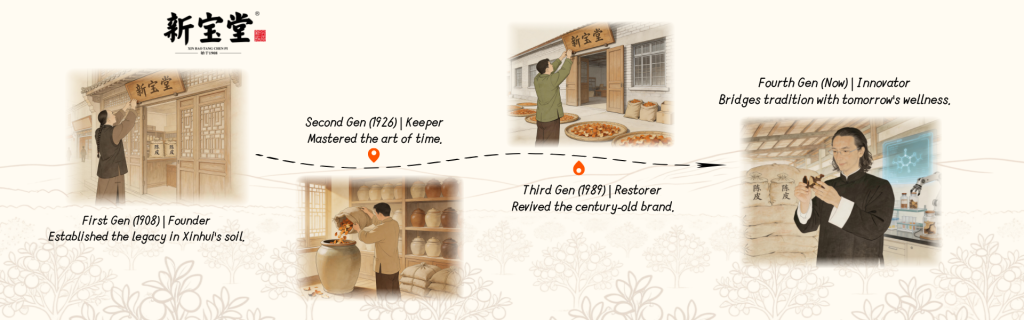
Every brand has a beginning. Few have the opportunity—and the responsibility—to carry that beginning forward for more than a century. Xinbaotang was founded in Xinhui, Guangdong, in 1908. Its name can be understood as “the treasure of Xinhui,” reflecting a commitment that has guided four generations of the Chen family: to preserve the authenticity, craftsmanship, and cultural value of Xinhui CHENPI. Today, Xinbaotang is entering a new chapter. The brand is bringing authentic Xinhui CHENPI to new consumers, developing contemporary products, collaborating with research institutions, and creating new opportunities for people around the world to experience this distinctive ingredient. Yet even as Xinbaotang evolves, its foundation remains unchanged.

Every piece of Xinbaotang CHENPI begins with Chachi mandarin grown in Xinhui.
Rooted in Xinhui
Xinhui is more than the place where Xinbaotang was established. It is an essential part of the identity of authentic Xinhui CHENPI.
Located in Jiangmen, Guangdong, Xinhui is shaped by the meeting of rivers and the tides of the South China Sea. Its soil, water, climate, and agricultural traditions create the conditions in which Chachi mandarin has been cultivated for generations.
All Xinbaotang CHENPI is made from Chachi mandarin grown in Xinhui.
After harvest, the material used to produce CHENPI is carefully prepared and naturally sun-dried. It is then stored and allowed to age gradually over time.
The process cannot be rushed.
Temperature, humidity, storage conditions, seasonal changes, and regular care all influence how the aroma and character of CHENPI develop.
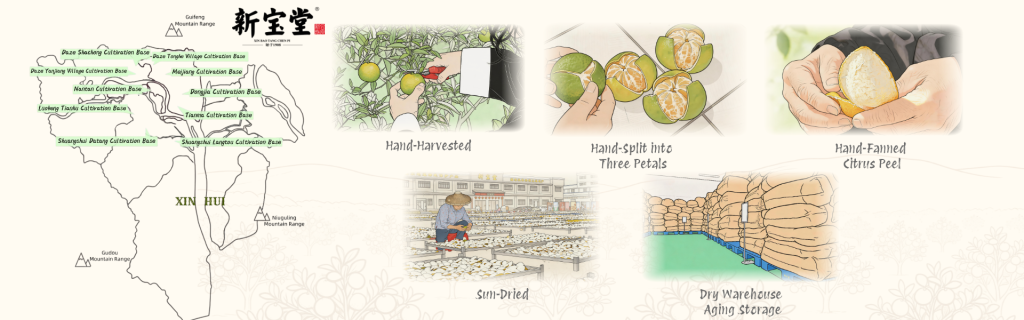
For Xinbaotang, respecting this process is not simply a production choice. It is a promise to remain true to the origin of the ingredient.
Four Generations, One Continuing Responsibility
Xinbaotang’s history has been carried through four generations of the Chen family.
Each generation faced a different world.
Periods of social change, economic transformation, agricultural challenges, and shifting consumer habits required the family to adapt. Methods of storage evolved. Quality management became more systematic. New technologies entered agriculture and food production. Consumers began discovering CHENPI in new forms and new settings.
What remained consistent was the family’s responsibility to protect the real thing.
The fourth generation has continued this work by preserving inherited knowledge while building modern capabilities in agriculture, standardized storage, product development, research, and traceability.
This balance between continuity and change defines Xinbaotang today.
The brand does not believe that tradition should remain frozen in the past. Nor does it believe that innovation should erase the identity of the original ingredient.
The goal is to move forward without losing the root.
From Traditional Craft to Modern Quality Systems
The traditional preparation of Xinhui CHENPI depends on experience, timing, observation, and patience.
Modern consumers also expect clear information, consistent quality, responsible storage, and traceable sourcing.
Xinbaotang brings these expectations together.
The company works with local growers and agricultural partners in Xinhui to support quality management at the source. Standardized storage systems help protect CHENPI during its long aging process. Traceability tools make it possible to document information about product origin, production, and storage.
Modern standards do not replace traditional craftsmanship.
They help protect it.
By combining inherited knowledge with documented systems, Xinbaotang aims to make the authenticity of its CHENPI easier to understand and verify—especially for consumers encountering the category for the first time.
Creating New Ways to Experience CHENPI
For generations, CHENPI has been used in Chinese homes in tea, soup, congee, desserts, and cooking.
Its layered aroma can bring depth and balance to a recipe without overpowering the other ingredients.
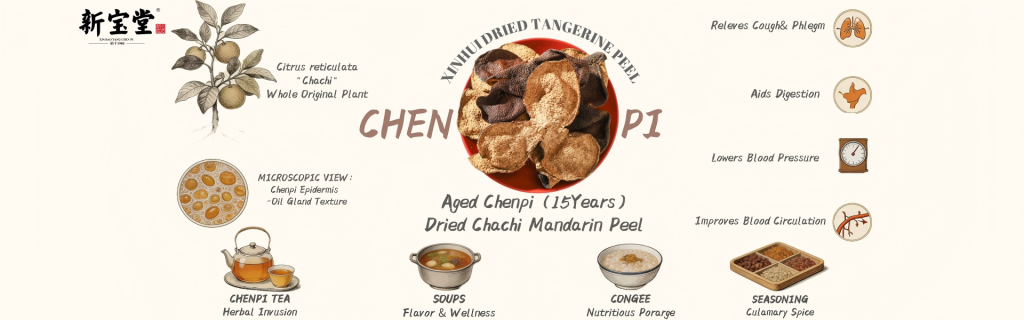
Xinbaotang continues to offer CHENPI in its traditional form, while also developing products that make it more accessible to contemporary consumers.
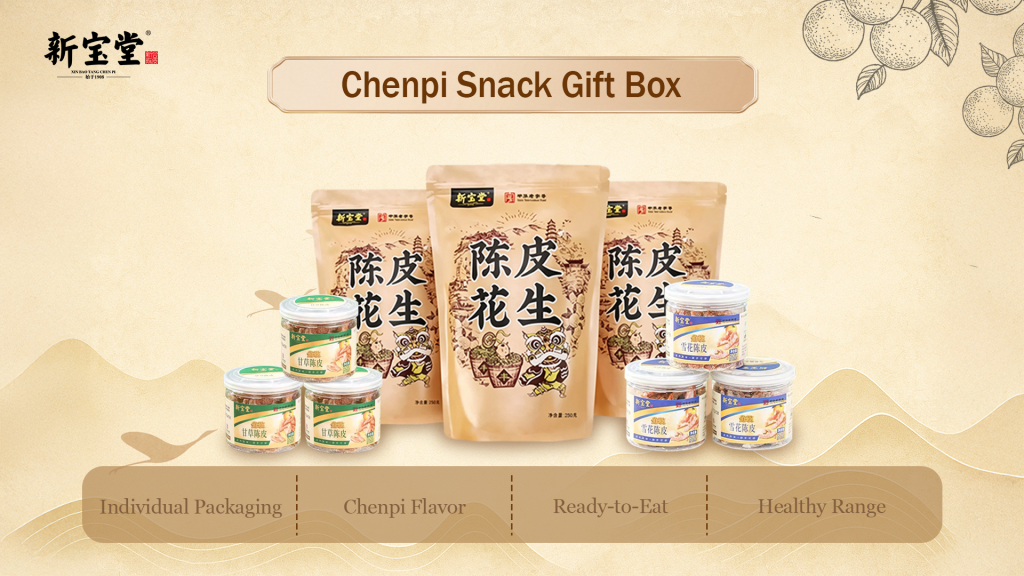
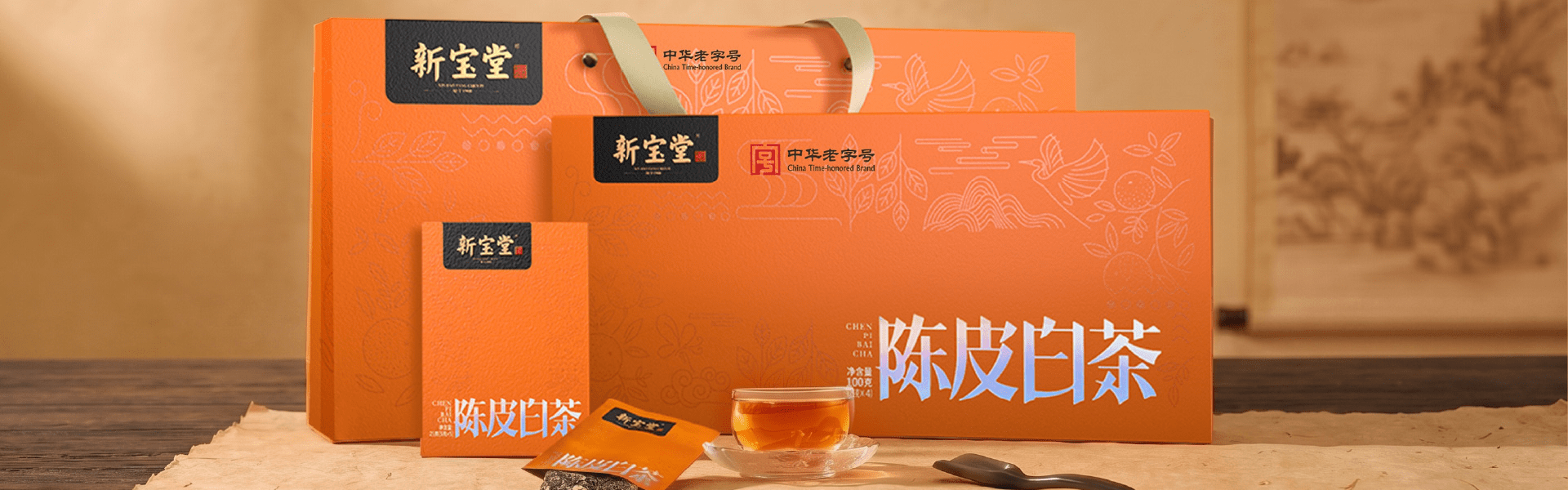
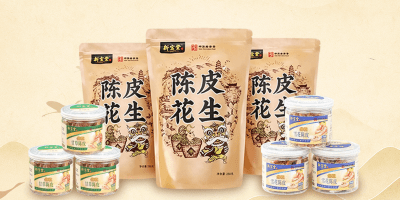
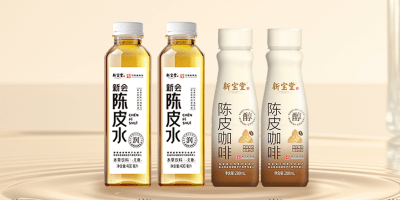
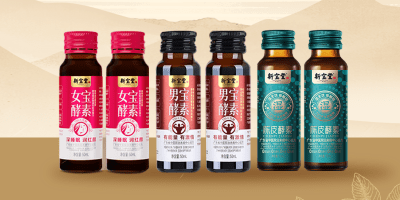
The company’s product exploration has included CHENPI teas, beverages, fermented products, snacks, pastries, coffee applications, culinary ingredients, and other products created from the Xinhui Chachi mandarin.
These new formats serve an important purpose.
A consumer who is unfamiliar with whole CHENPI may begin with a convenient tea or beverage. A home cook may discover it through a simple soup recipe. A pastry chef may explore its aroma in dessert. A barista or mixologist may find a new way to use it in a contemporary drink.
Each format offers a different entry point, but the brand story remains the same: authentic Xinhui origin, respect for time, and a commitment to real ingredients.
Researching New Possibilities
Xinbaotang has also invested in research and industry collaboration to explore the broader possibilities of Xinhui CHENPI and Chachi mandarin.
The company has established collaborations with universities, hospitals, and research institutions in China. These relationships have supported work in areas such as agriculture, food processing, fermentation, product development, quality evaluation, and the more comprehensive use of the Xinhui Chachi mandarin.
This includes exploring how more parts of the fruit can be used rather than discarded.
Juice, pulp, seeds, and other materials can create opportunities for new food and beverage applications. More complete use of the harvest can also increase the value created for growers and the local agricultural economy.
For Xinbaotang, innovation is not only about launching more products.
It is about understanding the ingredient more deeply, using resources more responsibly, and finding meaningful ways to connect traditional knowledge with contemporary life.
A Heritage Recognized in China
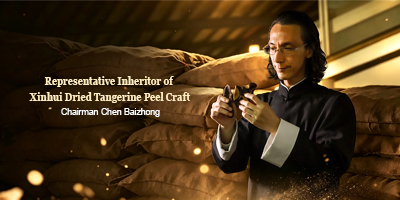
Xinbaotang is recognized as a China Time-Honored Brand and as a representative inheritor organization associated with the nationally recognized traditional craft of preparing Xinhui CHENPI.
For North American readers, these designations may require some explanation.
A China Time-Honored Brand is recognized for its long history, distinctive cultural heritage, and continued relevance. Recognition connected with intangible cultural heritage reflects the responsibility to preserve and transmit a living body of knowledge and craftsmanship.
These titles are not simply honors displayed on a wall.
They represent an obligation.
Xinbaotang must continue protecting the authenticity of Xinhui CHENPI, teaching the craft to future generations, and helping the culture remain meaningful in a changing world.
Bringing the Story to North America
As Xinbaotang grows in North America, the brand is introducing more than a product.
It is introducing a category that may be familiar to some consumers and completely new to others.
Some North American families already use CHENPI in tea and cooking as part of their cultural traditions. Others may first encounter it through a restaurant, a food creator, an Asian grocery platform, or a cup of tea.
Xinbaotang wants each introduction to answer four essential questions:
What is CHENPI?
Why does Xinhui origin matter?
How does natural aging influence its aroma and character?
How can it become part of everyday life?
Clear education is essential.
That means providing practical brewing instructions, straightforward recipes, transparent product information, and responsible descriptions of how CHENPI has traditionally been enjoyed.
It also means listening.
North American consumers will bring new questions, flavor preferences, culinary traditions, and creative ideas to the conversation. Their experiences will help shape how Xinbaotang communicates and develops products for this market.
The Next Chapter Is Shared
Xinbaotang’s story began in Xinhui in 1908, but it has never belonged to history alone.
It continues whenever a new generation learns the craft.
It continues when a consumer prepares CHENPI for the first time.
It continues when a family preserves a familiar tradition in a new country.
It continues when a chef, tea professional, baker, or barista discovers an unexpected use for its aroma.
And it continues as Xinbaotang brings authentic Xinhui CHENPI to new communities while remaining accountable to the land and knowledge from which it came.
The next chapter is not about leaving tradition behind.
It is about allowing an authentic tradition to travel, connect, and grow.
Xinbaotang — Since 1908.
Honor Time, Uphold Truth.
Begin Your CHENPI Journey